
The mini concrete pump mixer occupies a specific niche in the equipment market. It combines batching, mixing, and pumping functions into a single mobile chassis. This consolidation offers significant advantages for small to medium contractors, particularly on sites with restricted access or remote locations. However, the concrete mixer pump price is not arbitrary. Three primary variables determine the final cost: the mixing capacity (measured in cubic meters per batch), the boom length (which defines vertical and horizontal reach), and the engine type (which affects power, efficiency, and longevity). Understanding the relationship between these variables and price enables procurement professionals to configure machines that match application requirements without paying for unnecessary capability. This analysis quantifies the influence of each variable and provides a framework for value-based purchasing decisions.
Mixing Capacity: The Foundation of Pricing
Batch Volume and Its Mechanical Implications
The mixing capacity of a mini concrete pump mixer is typically expressed in cubic meters per batch. Common capacities range from 0.5 to 3.0 cubic meters. The relationship between capacity and price is nonlinear. A 1.0 cubic meter machine may cost $25,000 to $35,000. A 1.5 cubic meter machine typically costs $35,000 to $50,000—an increase of 40 to 60 percent for a 50 percent increase in capacity. A 2.5 cubic meter machine ranges from $55,000 to $80,000. The nonlinearity reflects the engineering demands of larger batches. The mixing drum must be constructed from thicker steel to withstand the increased load. The hydraulic motor driving the drum requires higher torque. The frame must be reinforced to handle the additional weight. The pumping system must be uprated to move the larger volume through the delivery pipeline. Each of these upgrades adds cost that compounds as capacity increases. The buyer must therefore resist the temptation to oversize. A machine with capacity exceeding the typical pour volume will carry unnecessary capital cost and will operate inefficiently on smaller batches.
Capacity Matching to Application
The appropriate mixing capacity depends on the project type and pour schedule. For residential slab-on-grade work, where pours rarely exceed 10 cubic meters per day, a 1.0 to 1.5 cubic meter machine is sufficient. For commercial foundations or multi-story residential projects, where daily volumes may reach 30 to 50 cubic meters, a 2.0 to 2.5 cubic meter machine is justified. The operational factor is cycle time. A 1.0 cubic meter machine producing a batch every 10 minutes achieves 6 cubic meters per hour. A 2.0 cubic meter machine on the same cycle achieves 12 cubic meters per hour. The larger machine may complete a 50 cubic meter pour in 4 hours rather than 8 hours. This time saving reduces labour costs and allows the crew to move to other tasks. The buyer should calculate the required hourly output based on project schedules and select the smallest capacity that meets that output. Oversizing increases purchase price without increasing productivity if the pump or placement crew cannot keep pace.
Boom Length: Reach and Structural Cost
Hydraulic Boom versus Manual Hose Configurations
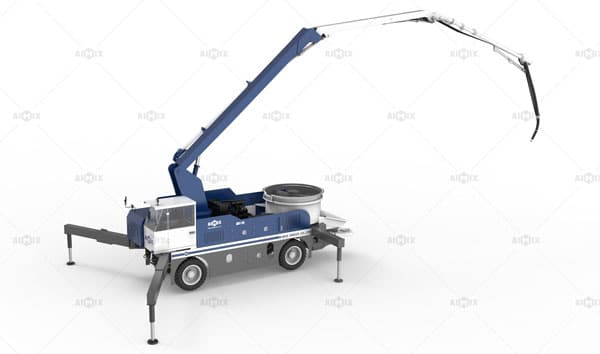
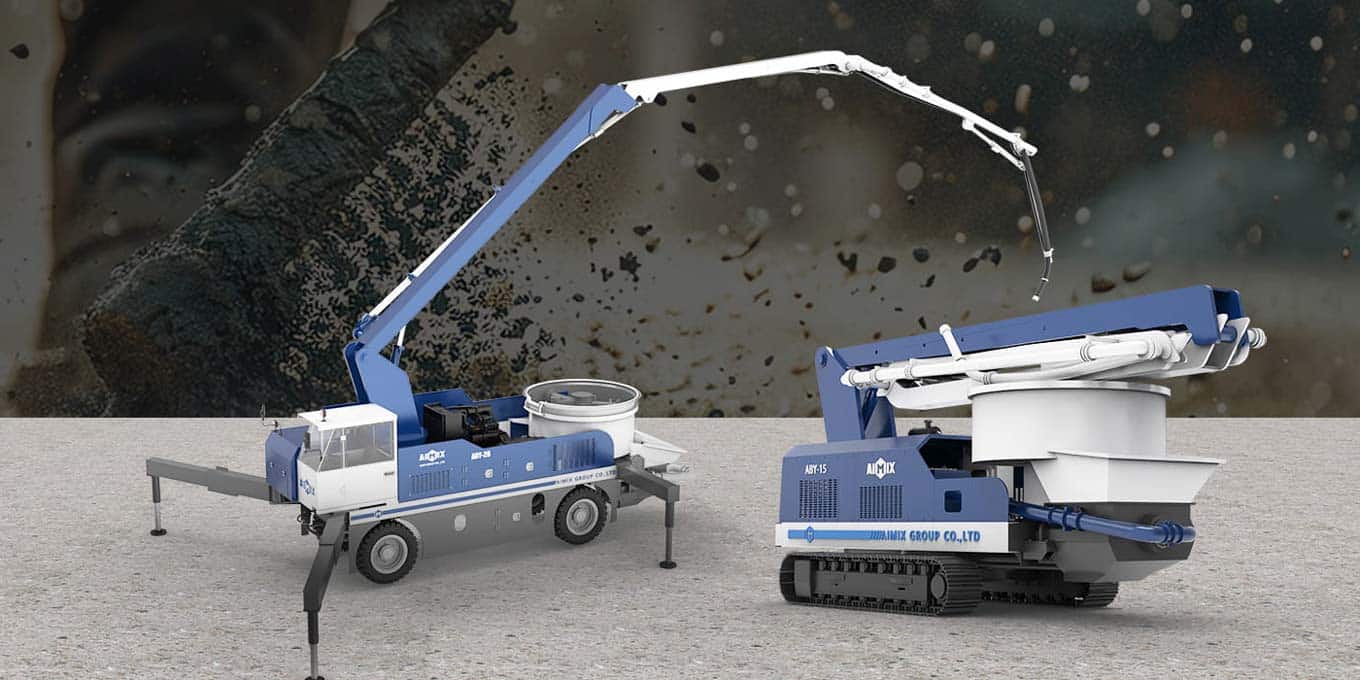
The boom is the most visually distinctive component of a mini concrete pump mixer. It is also one of the most expensive. Boom configurations fall into two categories: manual hose systems and hydraulic articulated booms. A manual hose system has no boom. The operator attaches a delivery hose directly to the pump outlet and moves the hose by hand. This configuration is inexpensive, adding $2,000 to $5,000 to the base price. However, manual hoses are limited to horizontal reaches of 20 to 30 meters and vertical reaches of 10 to 15 meters, depending on operator strength and site conditions. A hydraulic articulated boom adds $15,000 to $40,000 to the price, depending on length and number of sections. A 12-meter boom typically adds $15,000 to $20,000. An 18-meter boom adds $25,000 to $30,000. A 24-meter boom adds $35,000 to $45,000. The cost escalation reflects the complexity of the hydraulic cylinders, the precision of the articulation joints, and the structural engineering required to maintain stability at full extension.

Reach Requirements by Project Type
The required boom length is determined by the typical pour geometry. For single-story residential work, where the pump can be positioned within 10 meters of the formwork, a manual hose or a short 12-meter boom is adequate. For two to three story buildings, a 15 to 18-meter boom allows the pump to sit at ground level and reach the upper floors without repositioning. For four to six story buildings, a 20 to 24-meter boom is necessary. The buyer should also consider horizontal reach. A boom rated for 18 meters vertically may achieve only 12 to 14 meters horizontally at lower heights. The specification should be reviewed carefully. Manufacturers publish reach diagrams showing the working envelope. The buyer should overlay these diagrams on typical project layouts to verify adequacy. Over-specifying boom length adds unnecessary cost and weight, reducing mobility and increasing fuel consumption. Under-specifying forces the crew to reposition the cement mixer pump machine frequently or to extend the pour duration with manual hose work. The correct specification balances upfront cost against operational efficiency.
Engine Type: Power, Efficiency, and Longevity
Diesel Engines: Domestic versus Premium Brands
The engine is the power source for both the mixing drum and the hydraulic pump. Engine choice significantly influences price, fuel consumption, and maintenance costs. Three tiers exist. The lowest tier consists of domestic Chinese engines from manufacturers such as Changchai or Yuchai. These engines are inexpensive, adding $3,000 to $6,000 to the machine price. They are adequate for light-duty applications but have shorter service intervals and higher fuel consumption than premium alternatives. The mid-tier consists of established Asian brands such as Weichai (China) or Ashok Leyland (India). These engines add $6,000 to $10,000 to the price. They offer better fuel efficiency and longer component life. The premium tier consists of Japanese and European brands such as Kubota, Yanmar, Perkins, or Deutz. These engines add $10,000 to $18,000 to the price. They provide superior fuel efficiency, lower emissions, quieter operation, and service intervals of 500 hours or more. The total cost of ownership calculation favours premium engines for machines operating more than 1,000 hours annually.
Electric Motors and Hybrid Configurations
An emerging alternative to diesel is the electric motor. An electric-powered mini concrete boom pump mixer has no engine. It operates on three-phase grid power. The price is comparable to a mid-tier diesel machine, typically $30,000 to $50,000. The operating cost is substantially lower. Electricity is cheaper than diesel per unit of energy. Electric motors require less maintenance. There are no oil changes, no fuel filters, and no exhaust system repairs. The limitation is the requirement for grid access. For sites without three-phase power, a diesel generator can be used, but this adds cost and complexity. Hybrid configurations combine a diesel engine with an electric motor. The machine can run on grid power when available and switch to diesel when not. Hybrids add $8,000 to $15,000 to the price of a standard diesel machine. The payback period depends on the proportion of operating hours on grid power. For contractors working primarily in industrial areas with reliable power, a dedicated electric machine is optimal. For contractors moving between grid-connected and remote sites, a hybrid offers flexibility. The buyer should analyze the typical site power availability and select the configuration that minimizes total operating cost over the expected ownership period.